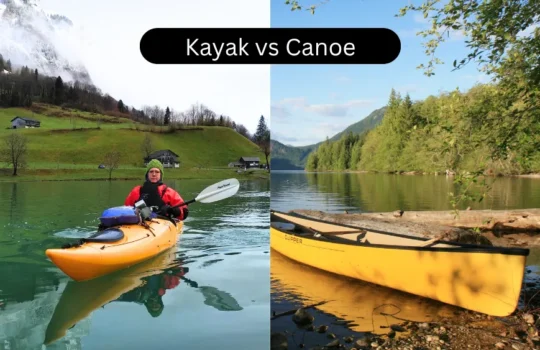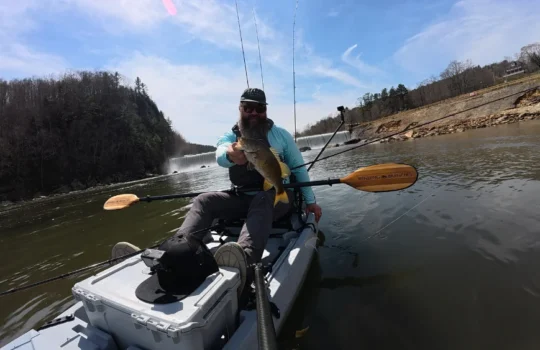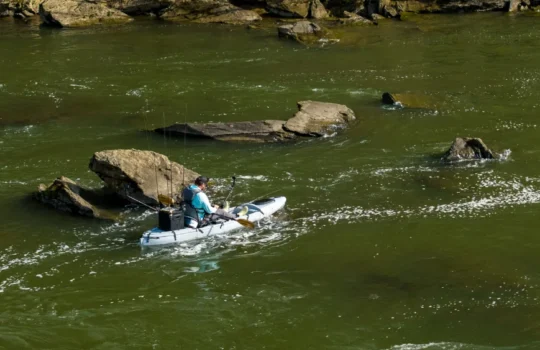
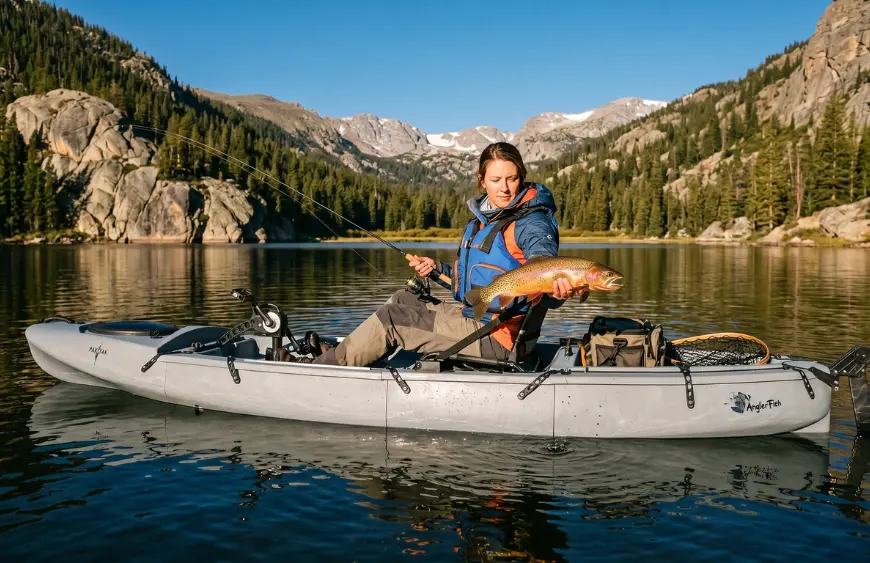
Ask ten bass anglers what kayak they’d recommend, and you’ll probably get ten different answers. Each may make sense for the angler’s specific water, fishing style, and priorities. The best bass fishing kayak for a river angler working shallow, rocky current can be very different from the ideal setup for a reservoir angler covering open water with a pedal drive. Water type, fishing style, propulsion preference, stability needs, portability, and budget all pull in different directions, and no single kayak optimizes for all of them at once.
Bass fishing requires more than a kayak that simply floats and carries your gear. Stability, storage, maneuverability, and water-specific characteristics can all affect how well a kayak works when you’re skipping a jig under a dock, working a chatterbait along a rocky bank, or covering open reservoir water.
Quick Comparison: Bass Fishing Kayaks
| Kayak Type | Typical Use | Propulsion | Portability | Main Consideration |
| General fishing kayak | Rivers and lakes | Paddle | Varies | Balance of stability, storage, and maneuverability |
| Budget fishing kayak | Occasional fishing | Paddle | Varies | Essential features at a lower price |
| Pedal-drive kayak | Covering larger areas | Pedal | Usually lower | Hands-free propulsion vs. added weight |
| Stand-up fishing kayak | Casting while standing | Paddle or pedal | Varies | Stability and deck layout |
| Portable/takedown kayak | Limited storage or transport | Varies | High | Compact transport vs. setup requirements |
| AnglerFish | Portable hard-shell fishing | Base or Pedal Drive | Nests to 43″ | Fishing functionality with compact storage |
Bass Fishing Kayaks to Consider
Different kayaks suit different bass fishing priorities. Rather than one universally “best” option, here’s how the major categories differ.
Kayak for General Bass Fishing
A well-rounded bass fishing kayak balances stability for casting and fish handling, enough storage for a reasonable tackle selection, and maneuverability for working structure and tighter water. This category covers common fishing needs without specializing heavily in any one direction, making it relevant to anglers who fish a mix of rivers, lakes, and ponds.
Budget-Friendly Bass Fishing Kayak
Entry-level fishing kayaks generally provide essential fishing features, such as basic rod holders and open deck storage, at a lower price point. Depending on the model, lower-priced kayaks may have simpler seating, fewer storage options, lower capacity, or heavier hulls than more expensive alternatives. For anglers who fish occasionally or are new to kayak fishing, a budget model can provide a lower-cost way to determine which features matter before making a larger investment.
Pedal-Drive Kayak for Bass Fishing
Pedal drives free both hands for casting and lure management while covering water, a genuine advantage for bass anglers working a shoreline or trolling between spots. The trade-off can include additional weight, mechanical complexity, and a higher purchase price than comparable paddle kayaks. Pedal drives also add setup and transport considerations, since the drive unit is typically removed for storage and reinstalled before launching.
Kayak for Stand-Up Bass Fishing
Standing improves casting accuracy, sight-fishing visibility, and overall control when working structure, but only in a kayak specifically designed and rated for it. Stand-up-capable kayaks prioritize a wide, stable hull and a flat, open deck layout with secure footing. Standing in a kayak not designed for it is a real capsize risk regardless of paddler experience.
Portable/Takedown Bass Fishing Kayak
For anglers without a roof rack, with limited home storage, or who want to transport a fishing kayak inside a vehicle, portable and takedown designs address the logistics that conventional fishing kayaks don’t. The trade-off compared with a traditional one-piece fishing kayak varies by construction format, some portable designs compromise on rigidity or storage capacity to achieve their compact footprint, while others maintain full hard-shell characteristics.
Pakayak AnglerFish
A purpose-built, nesting hard-shell fishing kayak that addresses the transport and storage challenge directly, without moving to an inflatable or folding format. Covered in detail later in this guide.
What Makes a Kayak Good for Bass Fishing?
Stability
Initial stability, how the kayak feels sitting flat, affects everyday confidence and casting comfort. Secondary stability, how the kayak behaves when leaned or affected by wake and wave action, becomes relevant when landing a fish boat-side or shifting position quickly to work a strike. Both matter for bass fishing specifically because the sport involves frequent position changes: casting to a new angle, reaching for gear, leaning to land a fish, and repositioning around structure.
Standing Position
Some bass anglers prefer to stand for improved casting range, sight-fishing visibility, and better leverage when setting the hook or fighting a fish. This preference should be matched to a kayak specifically designed and rated for standing, with a hull and deck layout that provides adequate stability and secure footing. Simply choosing the widest kayak does not guarantee that it is suitable for standing.
Deck Space
Open, uncluttered deck space supports casting room, standing stability where applicable, and easy movement around gear. Deck layout and stability are connected: a wide-open deck with poor weight distribution or a high seat position can undermine the stability benefits of hull width.
Storage
Bass fishing gear demands a mix of storage types: tackle storage for lures and terminal tackle, dry storage for electronics and valuables, and general space for a cooler, extra rods, or a livewell setup. How storage is organized, accessible without excessive reaching, but not cluttering the casting area, matters as much as total volume.
Rod Holders and Mounting Tracks
Flush-mounted rod holders, adjustable holders, and accessory tracks all support keeping gear organized and accessible. For bass anglers running multiple rod setups a jig rod, crankbait rod, topwater setup, or similar rod organization directly affects how efficiently you can switch techniques on the water.
Capacity and Weight
Total capacity needs to account for angler weight, all fishing gear, and a reasonable safety margin, not just body weight alone. Where that weight sits also matters: a loaded cooler and battery concentrated at one end of the kayak affects trim and handling differently than the same total weight distributed more evenly. Total capacity should be evaluated against your complete load, including your body weight, fishing gear, and onboard equipment. Our kayak weight limits article explains how published capacity ratings relate to real-world loading and kayak performance.
Maneuverability
Useful for working around vegetation, laydowns, docks, and other structures common to bass fishing. A kayak that turns and repositions easily lets you work a spot thoroughly without constantly fighting the hull to hold position.
How to Choose a Bass Fishing Kayak
Step 1: Identify Where You Fish
Rivers, lakes, and reservoirs each demand different hull characteristics, covered in detail later in this guide.
Step 2: Determine Your Fishing Style
Short local trips, longer sessions, frequent movement between spots, or stand-up casting all favor different kayak configurations.
Step 3: Choose Your Propulsion
Paddle, pedal, or motorized, each with real trade-offs in simplicity, cost, weight, and hands-free capability.
Step 4: Determine the Stability You Need
Match hull width and design to your fishing style, particularly if standing is part of your approach.
Step 5: Consider Storage and Fishing Accessories
Rod holders, tackle storage, and mounting options should match your actual gear setup, not just look impressive.
Step 6: Check Weight and Capacity
Account for your full gear load, not just body weight, and consider how that load will be distributed.
Step 7: Consider Transportation and Storage
Roof rack availability, vehicle size, and home storage space all affect which kayak format is realistic for your situation.
Step 8: Compare Price and Features
Balance what you actually need against what’s available at each price tier, rather than maximizing features for their own sake.
Paddle vs. Pedal vs. Motorized Kayaks
Paddle Kayaks
Paddle kayaks are generally simple, lightweight, and lower cost than pedal or motorized alternatives. Their maneuverability can be useful in tight, technical water, particularly for river bass fishing around structure. They also have no drive components to maintain.
Pedal Kayaks
Hands-free propulsion frees both hands for casting and lure work while moving. Efficient for covering larger areas and trolling between spots. The trade-off can include additional weight and more setup complexity, since the drive unit typically needs to be inserted before launching and removed for transport.
Motorized Kayaks
Extended range and reduced physical effort for covering large reservoirs or lakes. Added weight from batteries and motor hardware is significant, transport and storage logistics become more complex, and local regulations on motorized kayaks vary by state and waterway, worth checking before investing in this setup.
Which Propulsion System Fits Your Bass Fishing Style?
For technical river fishing around structure, paddle propulsion can be useful where maneuverability and simplicity are priorities. For open lake or reservoir fishing, pedal drive can be useful when hands-free propulsion is a priority. For anglers prioritizing greater range on large water bodies and willing to manage additional weight and complexity, a motor can reduce the effort required to cover distance. None of these systems is universally better; the right option depends on your typical water and fishing approach.
Sit-On-Top vs. Sit-Inside Kayaks for Bass Fishing
Sit-On-Top Kayaks
An open deck provides unobstructed access to tackle, rods, and gear without reaching around a cockpit enclosure. Standing is more straightforward on stand-up-rated sit-on-top designs, and re-entry after an accidental capsize is generally simpler than with a sit-inside kayak.
Sit-Inside Kayaks
An enclosed seating position offers more protection from wind, spray, and cold water. Some sit-inside designs position the paddler lower in the hull, which can affect stability characteristics differently than a sit-on-top of similar width. The enclosed cockpit can limit quick access to gear stored around the seating area compared to an open sit-on-top deck.
Which Should Bass Anglers Choose?
Sit-on-top designs are more common for bass fishing because of the open gear access and standing capability they offer. Sit-inside kayaks remain a reasonable choice for anglers prioritizing cold-weather protection or fishing conditions where reduced water exposure matters more than open deck access. The right choice depends on your typical conditions and how you prefer to fish, not a universal rule favoring one format.
Choosing a Bass Fishing Kayak by Water Type
River Bass Fishing
Rivers introduce current, shallow rocky sections, and tighter maneuvering requirements that reservoirs and calm lakes don’t. A shorter, maneuverable hull can be easier to handle in tight river sections, since quick turns and course corrections around structure often matter more than straight-line tracking. Shallow draft helps avoid grounding in skinnier sections, and easy entry and exit matters for anglers who beach the kayak frequently to fish from shore or wade nearby structure.
Lake Bass Fishing
Open lake water introduces wind exposure and the need for reasonable tracking efficiency to avoid excessive drift while fishing. Stability remains important for casting and fish handling, and storage becomes more relevant on lakes where anglers often cover more total distance between productive spots than on a tighter river stretch.
Reservoir Bass Fishing
Reservoirs combine the challenges of large open water with often significant depth changes and, in many systems, fluctuating water levels depending on management schedules. Longer distances between launch points and productive water favor efficient tracking and, for many anglers, pedal or motor propulsion to cover ground without excessive fatigue. Wind exposure on large reservoirs can be substantial, making stability and tracking both meaningful considerations simultaneously.
What Size Kayak Is Best for Bass Fishing?
There isn’t one universally ideal size for bass fishing, the right dimensions depend on where you fish and how you fish it.
Kayak Length
Shorter kayaks maneuver more easily in tight water and structure-heavy environments common to river and pond fishing. Longer kayaks track more efficiently and cover open water with less effort, an advantage on large lakes and reservoirs.
Kayak Width
Wider kayaks generally offer more initial stability, supporting confident casting and, where the design allows, standing. Width comes with a speed and efficiency trade-off, a wider hull requires more effort to paddle the same distance as a narrower one.
Kayak Weight
Kayak weight affects transportation, launching, and storage. A heavier, more stable fishing kayak may be worth the trade-off for anglers with vehicle-side launches, while lighter designs matter more for anglers carrying the kayak any real distance to the water.
Kayak Capacity
Total capacity needs to cover angler weight plus gear, tackle, rods, a cooler, electronics, and any catch. Don’t choose a kayak’s capacity based on body weight alone; your realistic total load, and how that load will be distributed across the kayak’s storage areas, both matter more than a simple body-weight comparison against the published rating.
Fishing Kayak vs. Recreational Kayak for Bass Fishing
| Feature | Fishing Kayak | Recreational Kayak |
| Stability | Often prioritized in design | Varies by model |
| Rod storage | Common | May be limited or absent |
| Mounting options | Often available (tracks, rails) | Usually simpler or absent |
| Deck layout | Fishing-oriented | General recreation |
| Storage | Often designed for fishing gear | Varies |
| Weight | Varies by model | Varies by model |
When Can a Recreational Kayak Work for Bass Fishing?
A recreational kayak can work for casual bass fishing on calm water, particularly for anglers just starting out or fishing infrequently. The differences become more noticeable as anglers need dedicated storage, mounting options, greater stability, or other fishing-specific features. Depending on the model, a recreational kayak may provide less fishing-specific deck space or fewer features for organizing fishing equipment. For anglers who fish bass regularly, a dedicated fishing kayak may provide features that better match their needs.
Essential Kayak Bass Fishing Gear
At a basic level, bass fishing from a kayak requires:
- Fishing rod and reel matched to your target technique.
- Tackle appropriate for the water and season.
- Paddle (even in a pedal or motor kayak, as backup propulsion).
- PFD, worn rather than stored.
- Appropriate safety equipment for your water conditions.
- Landing net for safer, easier fish handling.
Organizing Gear on Your Kayak
Keep frequently used equipment, your primary rod, pliers, and immediate tackle, within easy reach, and secure less frequently used gear in dedicated storage rather than leaving it loose on deck. Rod holder placement, tackle organization, and gear selection all become more important as your setup grows. Our kayak fishing setup and gear resource covers the equipment and organization considerations that support different fishing setups.
Is the Pakayak AnglerFish Suitable for Bass Fishing?
The Pakayak AnglerFish is a purpose-built fishing kayak that applies Pakayak’s nesting construction to a dedicated fishing hull, addressing the transport and storage challenges that come with a conventional full-length fishing kayak, without moving to an inflatable or folding format.
AnglerFish Features Relevant to Bass Fishing
Portability and Transportation:
The AnglerFish assembles to 140 inches (11’8″) and nests down to a 43-inch packed length for storage and transport. The 43-inch nested length can simplify transport in vehicles that cannot accommodate a conventional full-length fishing kayak. This matters directly for bass anglers who fish multiple rivers, lakes, or reservoirs and want to transport a hard-shell fishing kayak without dedicated roof rack infrastructure, or who have limited home storage between trips.
Setup Considerations:
As with any nesting kayak, assembly and disassembly add a short setup routine compared to a one-piece fishing kayak that’s always ready to launch. For anglers who prioritize compact transport and storage, that setup requirement may be a worthwhile trade-off.
Fishing Considerations:
At 32 inches wide, the AnglerFish provides a relatively broad platform for active fishing. Its published maximum capacity is 425 pounds, so anglers should account for their body weight, fishing gear, and other onboard equipment when calculating total load. The hull weight is 80 pounds, with an overall height of 20 inches.
Available Configurations:
The AnglerFish is available in Base and Pedal Drive models, giving bass anglers a choice between paddle propulsion and hands-free pedal fishing on the same hull platform.
Who Might Consider the AnglerFish?
- Bass anglers who fish multiple bodies of water and want one fishing kayak that transports easily between them.
- Anglers with limited home storage, apartment or condo dwellers, or anyone without garage space for a full-length kayak.
- Paddlers who want a dedicated fishing hull rather than adapting a recreational or touring kayak.
- Anglers who want the option of Pedal Drive propulsion while retaining the AnglerFish’s nesting format.
Bass anglers considering a portable hard-shell fishing platform can explore the Pakayak AnglerFish fishing kayak for its current specifications, available configurations, and pricing.
Bass Fishing Kayak Buying Checklist
- [ ] Appropriate for your primary water type (river, lake, or reservoir)
- [ ] Suitable stability for your fishing style, including standing if relevant
- [ ] Enough capacity for you and your gear, with realistic load distribution considered
- [ ] Appropriate length and width for your water and maneuverability needs
- [ ] Adequate storage for tackle, dry goods, and general gear
- [ ] Rod holders and mounting options matched to your setup
- [ ] Comfortable seating for your typical session length
- [ ] Appropriate propulsion system for how and where you fish
- [ ] Easy enough to transport given your vehicle and typical launch points
- [ ] Fits your home storage situation
- [ ] Fits your budget, including any necessary accessories
- [ ] Matches the manufacturer’s intended use for your water conditions
Frequently Asked Questions
Can you fish for bass in a standard kayak?
Yes. A standard recreational or touring kayak can work for casual bass fishing, particularly on calm water. A dedicated fishing kayak adds stability, storage, and rod organization that becomes increasingly valuable as your fishing gets more serious.
What type of kayak is best for bass fishing?
The best kayak for bass fishing depends on where you fish, how you fish, and which features matter most to you. River anglers may prioritize maneuverability, while lake and reservoir anglers may place more emphasis on tracking, stability, storage, and efficient propulsion. Matching these factors to the right hull matters more than any single “best” recommendation.
Is a pedal kayak worth it for bass fishing?
A pedal kayak can be useful for anglers who value hands-free propulsion while working a shoreline or covering larger water. The added weight, cost, and setup complexity should be considered alongside those benefits.
How stable does a kayak need to be to stand and cast?
Standing requires a kayak specifically designed and rated for it, typically a wide hull with a flat, stable deck layout. Attempting to stand in a kayak not designed for standing carries real capsize risk regardless of the paddler’s experience or balance.
What size kayak is best for bass fishing?
It depends on your water type. Shorter kayaks maneuver better in rivers and tight structure; longer kayaks track more efficiently on open lakes and reservoirs. Width affects stability and speed as a trade-off in both directions.
Is a sit-on-top kayak better for bass fishing?
Sit-on-top designs are more common for bass fishing because of open gear access and standing capability where the hull supports it. Sit-inside kayaks remain a reasonable choice for anglers prioritizing weather protection over open deck access. The better choice depends on your typical conditions and fishing style.
How to Choose the Right Bass Fishing Kayak for You
The decision comes down to a sequence: start with your water type, define your fishing style, choose a propulsion system that matches how you actually fish, confirm the stability you need, evaluate storage and accessory options, check capacity against your full gear load, and factor in transportation and budget last. Once you know what the kayak needs to do, price and features are easier to evaluate against real priorities rather than a feature list.
For bass anglers whose biggest obstacle is transporting and storing a full-size fishing kayak, whether that’s a lack of roof rack, limited garage space, or fishing multiple bodies of water without a dedicated tow vehicle, the Pakayak AnglerFish offers a portable alternative to a conventional one-piece fishing kayak.